Compare Havering Skip Hire vs Rubbish Removal Services
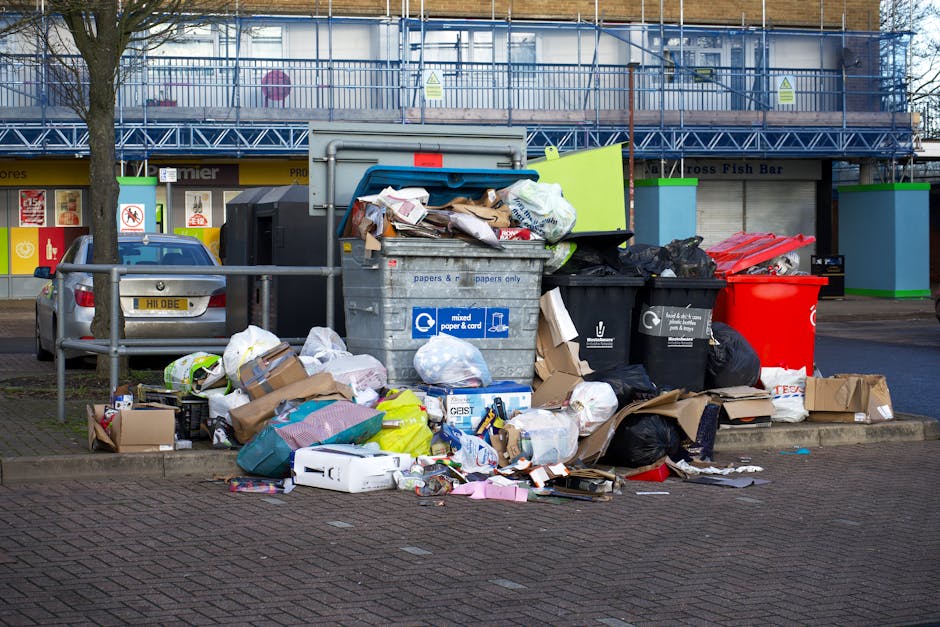
If you are trying to clear waste in Havering, the choice between skip hire and rubbish removal can shape the whole job. It affects cost, effort, timing, access, and even how calmly the day goes. Compare Havering Skip Hire vs Rubbish Removal Services properly, and you will usually spot a clear winner for your situation before you spend a penny. The tricky part is that both options can look similar at first glance. They are not. One puts the work in your hands; the other shifts most of it to the team collecting the waste.
That matters whether you are emptying a house, sorting out garden waste after a long weekend, tackling builder's rubble, or dealing with a messy office clear-out that has been quietly building up for months. In this guide, we will look at how each service works, where each one shines, what the hidden trade-offs are, and when a local waste removal service is the more practical call. Straightforward, useful, and no fluff.
Why Compare Havering Skip Hire vs Rubbish Removal Services Matters
Waste clearance decisions are rarely just about "getting rid of stuff". They are about where the waste sits, how fast you need it gone, whether you can physically load it yourself, and how much disruption you can tolerate. In Havering, that often means comparing a skip parked on the drive or road with a collection team who arrives, loads, and leaves the place swept up. Small difference on paper. Big difference in real life.
Skip hire tends to suit jobs where waste is generated over time or where you want a fixed container on site. Rubbish removal services suit jobs where you want speed, labour included, and less awkward lifting. Truth be told, many people start out assuming skip hire is always cheaper, then realise access, permit needs, or loading time changes the picture completely. Others assume rubbish removal is only for tiny jobs, which is also off the mark.
There is another angle too: the type of waste. Some projects involve mixed items, from old furniture to broken shelves, carpet offcuts, garden clippings, and the odd mystery box nobody wants to open. That kind of mixed, awkward load is often easier to handle with a service that can collect and sort it for you. If you are dealing with furniture-heavy clearances, pages such as furniture clearance and furniture disposal are useful places to start.
How Compare Havering Skip Hire vs Rubbish Removal Services Works
Start by separating the two models. Skip hire is a drop-and-fill service. A skip is delivered, placed on your property or sometimes the road, and you fill it yourself over a set period. Once you are done, the skip is collected. The main labour is yours, even if the bin lorry does the driving. That is fine if the waste is easy to move and you have time.
Rubbish removal services work differently. A team arrives at an agreed time, assesses the waste, lifts and loads it, and takes it away. Depending on the provider, the team may clear from a single room, a loft, a garden, a garage, or a whole property. The appeal is obvious: no hiring a container, no standing around in the rain with sacks, no trying to work out how to lift a broken wardrobe without taking a chunk out of the wall. Let's face it, a lot of waste is awkward before it is even heavy.
In practical terms, the right choice usually depends on three things:
- Volume: How much waste you actually have.
- Access: Whether a skip can be placed safely and legally where you need it.
- Labour: Whether you want to do the lifting yourself or not.
For larger clearances involving homes, lofts, or mixed bulky waste, it can help to compare this with services such as home clearance, house clearance, or loft clearance. Those services are designed around the kind of real-world clutter that rarely behaves neatly.
Key Benefits and Practical Advantages
Both options have real value. The better one is usually the one that fits the job rather than the one that sounds cheapest in isolation.
Why skip hire appeals
- Good for ongoing DIY or renovation projects.
- Useful when you want waste on site for a few days.
- Can work well for predictable, uniform waste streams.
- Lets you load gradually, which suits phased jobs.
For example, if you are doing a bathroom refit and the rubble will come out in batches, a skip can be a tidy solution. You can chip away at it, quite literally sometimes, without waiting for a collection slot.
Why rubbish removal appeals
- Fast, often same-day or short-notice collection options.
- No lifting requirement for the customer in most cases.
- Better for tight access, flats, and properties without easy frontage space.
- Often better for mixed loads and bulky items.
This is where many people in Havering find the service more practical, especially in flats, terraced streets, or places where a skip would be a nuisance. If you are clearing a flat, a service like flat clearance can make the job feel far less disruptive. One trip, one team, done.
What gets overlooked
The hidden benefit of rubbish removal is not just speed. It is the reduction in friction. You do not have to coordinate a skip permit, worry about neighbours, or spend a Saturday afternoon hauling rubble in wheelbarrows. Skip hire has its own efficiency, yes, but rubbish removal removes a layer of human effort that can be very welcome when you are already busy or dealing with a stressful clear-out.
| Factor | Skip Hire | Rubbish Removal |
|---|---|---|
| Customer labour | You load it yourself | Team loads for you |
| Speed | Best for longer jobs | Usually faster for one-off clearances |
| Access | Needs space for placement | Works better in tight or awkward access areas |
| Flexibility | Good for gradual filling | Good for bulky, mixed, or time-sensitive waste |
| Disruption | Can be visible for days | Usually minimal once the team leaves |
Who This Is For and When It Makes Sense
There is no one-size-fits-all answer, which is slightly annoying, but also useful once you accept it. Different jobs need different approaches.
Skip hire tends to suit:
- Homeowners doing DIY over several days.
- Projects with steady waste generation.
- People with clear driveway or road access.
- Jobs where the waste is easy to carry and stack neatly.
Think of a kitchen renovation where rubble, cabinets, packaging, and old fixtures come out in stages. A skip can sit there quietly in the background while the work unfolds.
Rubbish removal tends to suit:
- Busy households that want a quick reset.
- Landlords between tenancies.
- Families handling bereavement or inherited property clear-outs.
- Offices and small businesses with accumulated junk, furniture, or mixed waste.
If you are dealing with business waste, office furniture, or day-to-day commercial clutter, a dedicated service like business waste removal or office clearance is often the more efficient route. You want the place cleared, not turned into a logistics project.
Garden jobs are another common split. A neat pile of cuttings and soil may work fine in a skip, but a full garden clear-out with broken planters, timber, shed contents, and green waste is usually easier with a collection team. If that sounds familiar, garden clearance and related waste support may be the calmer choice.
Step-by-Step Guidance
If you are not sure which option to choose, work through it in this order. It is simple, but surprisingly effective.
- List what needs removing. Write down the main categories: rubble, furniture, garden waste, general junk, office items, or mixed household rubbish.
- Estimate volume honestly. People tend to underestimate waste piles. A stack that looks "small enough" in a corner can fill a vehicle or skip faster than expected.
- Check access. Can a skip be placed safely? Is there space? Would a collection team struggle to carry items down stairs, through narrow hallways, or from a loft?
- Think about timing. If the waste will build over a week, skip hire can work well. If you need the space back by tomorrow morning, rubbish removal is usually more realistic.
- Decide how much labour you want to do. Be honest here. Nobody gets extra points for loading a fridge by themselves in the dark.
- Ask about waste handling and sorting. Responsible providers should be clear about recycling and disposal practices.
- Compare total value, not just headline price. Include permits, loading effort, time, and disruption in the comparison.
One practical tip: take a few photos before you book anything. It helps you judge quantity, access, and whether a team or skip makes more sense. It also avoids that awkward moment when the waste looks, well, different in person than it did in your head.
Expert Tips for Better Results
In our experience, the best waste jobs are the ones planned just enough to avoid surprises. Not overplanned. Just enough. Here are the habits that make a real difference.
- Separate reusable items early. Furniture, appliances, and fixtures can often be dealt with more efficiently if they are not buried under general waste.
- Keep hazardous items out of mixed loads. Paints, chemicals, and certain electricals often need special handling.
- Group waste by room or area. That makes it easier for a team to work quickly and reduces missed items.
- Be clear about stairs, parking, and access. Small access details can change the job dramatically.
- Choose the service based on the hardest item, not the easiest one. One bulky wardrobe or awkward sofa can change the whole decision.
If you are dealing with furniture-heavy waste, it may also help to look at furniture disposal so you can decide whether individual items need a more targeted approach. A collection team can be a lot less stressful when the furniture is oversized, heavy, or just plain awkward.
And honestly, if a job includes stairs, damp cardboard, or a bit of rain on the path, rubbish removal starts sounding better very quickly. Little things. They add up.
Common Mistakes to Avoid
A lot of waste jobs go wrong in the same predictable ways. Avoid these and you are already ahead.
- Choosing skip hire because it seems cheaper at first glance. Once you add permits, loading time, and the hassle factor, the picture can change.
- Booking rubbish removal without sorting access. If a team cannot get to the waste, the job slows down or costs more than expected.
- Underestimating mixed waste. A "few bits and pieces" can turn into a very real load.
- Leaving everything to the last minute. Waste piles have a habit of growing overnight. Strange, but true.
- Ignoring what can be recycled or reused. Responsible disposal is not just better practice; it can also make the process smoother.
Another common issue is using the wrong service for the setting. A skip outside a flat block can be more hassle than it is worth, while a collection team in the middle of a long DIY project may feel less practical than a skip sat ready on site. The answer really depends on the job, not the label.
Tools, Resources and Recommendations
You do not need special software or technical tools to make a good choice. What you do need is a clear view of the job.
- Phone camera: Take photos of the waste from a few angles.
- Simple room-by-room list: Helps separate bulky items from mixed rubbish.
- Rough measuring tape: Useful if access is tight or items are large.
- Basic schedule: Helps you decide whether you need same-day clearance or can wait for a skip delivery.
If the job is part of a larger clean-up, it may help to compare related services first. For example, a loft full of old boxes and forgotten furniture may be better handled through loft clearance. A general household reset may suit home clearance or house clearance. Those service pages can help you match the job to the right type of clearance rather than forcing it into a skip-sized box.
For pricing clarity, it is sensible to review pricing and quotes so you know what to ask, what to compare, and what details matter before booking. A transparent quote is worth more than a vague "starting from" line that sounds nice and tells you very little.
Law, Compliance, Standards, or Best Practice
Waste removal in the UK is not something to treat casually. You do not need to become a compliance expert, but you do need to use a provider that handles waste responsibly and can explain what happens to it. That includes appropriate transport, sorting, recycling where possible, and lawful disposal of non-recyclable material.
For homeowners, the key practical point is simple: do not leave waste with anyone who cannot clearly explain how it will be handled. For businesses, the standard is even more important because commercial waste must be dealt with properly and records may matter later. If you are clearing an office or workplace, it is sensible to choose a provider that understands business waste removal expectations and can work around operational needs.
Health and safety also matters. Heavy lifting, sharp edges, broken glass, mouldy materials, and awkward furniture all carry risk. A reputable provider should take care with loading methods, vehicle safety, and site handling. You can review guidance like the company's health and safety policy and insurance and safety information to understand how seriously safety is treated.
There is also a sustainability angle. Good waste handling should not feel like a mystery. If recycling and diversion from landfill are part of your decision-making, check the provider's recycling and sustainability approach. You do not need perfection, but you do want evidence of care and process.
Small point, but an important one: if a job is unusually large, contaminated, or involves sensitive material, ask questions before booking. Better to sound cautious for two minutes than regret a rushed decision later.
Options, Methods, or Comparison Table
If you want the short version, here it is: skip hire is best when you can do the loading yourself and the waste will sit on site for a while; rubbish removal is best when you want the work done for you, quickly, and with less disruption.
| Scenario | Better Option | Why |
|---|---|---|
| DIY project over several days | Skip hire | Waste is generated gradually and can be loaded as you go |
| Flat clearance with narrow access | Rubbish removal | Less need for on-street storage or a skip permit |
| Bulky furniture and mixed clutter | Rubbish removal | Team loading saves time and effort |
| Building rubble from a renovation | Skip hire | Predictable waste and easy self-loading |
| Garden clear-out with mixed items | Depends | Simple green waste may suit a skip; mixed items often suit collection |
| Office furniture replacement | Rubbish removal | Bulky desks, chairs, and cabinets are easier handled by a team |
One useful way to think about it is this: skip hire is a container-first solution, while rubbish removal is a labour-first solution. That simple distinction clears up most of the confusion.
Case Study or Real-World Example
A typical Havering scenario might look like this. A family is clearing out a house after years of accumulated belongings. There are old chairs in one room, boxes in the loft, broken storage units in the garage, and a few bags of garden waste outside. At first, they think a skip will be easiest. Then they picture carrying everything downstairs, sorting it into piles, and trying to stay organised while the weather turns damp and the driveway gets crowded.
After a bit of thought, they go with rubbish removal instead. The team arrives, moves through the property in sections, and clears the bulky items without the family having to do the heavy lifting. The result is not just a tidier property. It is less emotional friction. When you are already dealing with a full house, that matters more than people sometimes admit.
Now compare that with a small builder refurbishing a bathroom in stages over a week. They produce tile debris, plasterboard offcuts, packaging, and old fixtures at different points. In that case, a skip on site is probably the more sensible choice. It stays put, takes waste as it appears, and keeps the job moving. Different problem. Different answer. Nice and boring, which is often exactly what you want.
Practical Checklist
Use this before you book anything.
- Have I listed all waste types clearly?
- Is the waste mostly bulky, mixed, or heavy?
- Do I have enough space for a skip if needed?
- Would a team loading the waste save me time or strain?
- Do I need same-day or fast turnaround?
- Is the waste likely to grow over several days?
- Have I checked whether anything needs special handling?
- Do I understand the total cost, not just the headline price?
- Is sustainability or recycling important to this job?
- Do I want the place cleared with minimum disruption?
If you can answer those questions honestly, the right option usually becomes obvious. Not always instantly, but close enough.
Conclusion
When you compare Havering skip hire vs rubbish removal services properly, the choice is less about which one is "better" and more about which one is better for this specific job. Skip hire is often the stronger fit for gradual, predictable waste from DIY or renovation work. Rubbish removal is usually the smarter option for bulky, mixed, time-sensitive, or access-challenged clearances where labour and speed matter most.
That is the practical truth, and it saves a lot of second-guessing. If you want control over loading over several days, a skip can be a very solid choice. If you want the clutter gone without spending your evening wrestling with it, rubbish removal may be the easier win. Either way, choose based on the shape of the job, not just the sticker price.
For a trusted next step, explore the relevant service pages, review the company's approach to safety and sustainability, and decide which format matches your space, your timeline, and your patience level. Sometimes the right answer is the simplest one. You just need to see it clearly.
Get a free quote today and see how much you can save.
Frequently Asked Questions
Is skip hire cheaper than rubbish removal in Havering?
Not always. Skip hire can look cheaper at first, but once you factor in loading time, possible permits, and the effort involved, rubbish removal can offer better overall value for some jobs.
Which is better for a house clearance?
Rubbish removal is often the better fit for house clearance because it handles mixed items, bulky furniture, and heavy lifting more comfortably. A dedicated house clearance service can be especially useful if the property is full or awkward to access.
When does skip hire make more sense?
Skip hire makes sense when you are generating waste over time, such as during a renovation, landscaping project, or ongoing DIY job. It is especially useful if you can load the waste yourself.
Do I need a permit for a skip on the road?
Often, yes, if the skip is placed on a public road or highway. The exact requirements depend on the location and arrangement, so it is best to ask the provider before booking.
Can rubbish removal handle bulky furniture?
Yes. In many cases, bulky items are exactly what rubbish removal is best at. If you have sofas, wardrobes, desks, or other awkward pieces, furniture-focused services can help.
What if I have a mix of garden waste and old furniture?
A rubbish removal service is often the easier choice for mixed loads. If the job is mainly outdoors, garden clearance can also be a helpful route to consider.
Is one option faster than the other?
Usually rubbish removal is faster for one-off clearances because the team loads everything in one visit. Skip hire is slower by design, since the container stays with you until you are finished.
Which option is better for tight access properties?
Rubbish removal is usually better for flats, narrow streets, and properties without much external space. A skip can be awkward or simply impractical in those settings.
Can I compare quotes directly?
Yes, and you should. Just make sure you compare the same job details each time. Look at what is included, what access is required, and whether loading or disposal is part of the price. The page on pricing and quotes can help you think through the right questions.
What should I check before choosing a provider?
Check safety, insurance, waste handling, recycling practices, and whether the service clearly matches your job type. If it is a business setting, see whether they understand business waste removal needs as well.
Can I use skip hire for mixed rubbish?
Sometimes, yes, but mixed rubbish can be less efficient if it includes bulky furniture, awkward items, or waste that is hard to stack neatly. In those cases, rubbish removal can be more convenient.
What is the best option for a loft or garage full of clutter?
For lofts and garages, rubbish removal is often the simpler choice because the labour is included. A service like loft clearance or garage clearance can save a lot of time and strain.
How do I know which service suits my situation?
Ask yourself whether the waste will be generated gradually or cleared all at once, whether you have space for a skip, and whether you want to do the loading yourself. Those three answers usually point you in the right direction.